
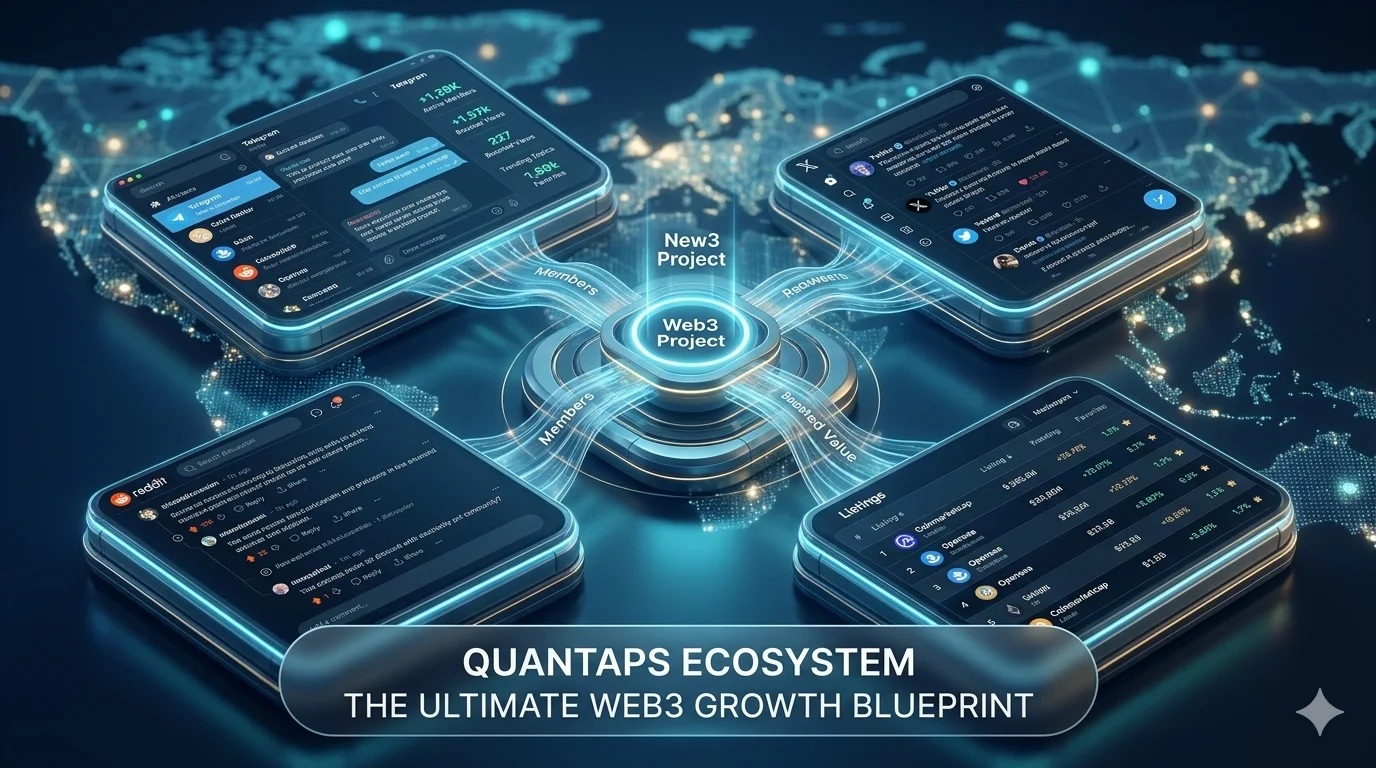
Getting more community members for a Web3 project can still make a real difference in how a token or NFT is perceived. Even though the crypto space has changed over the years, community-level trust signals remain important. When users land on a project's Telegram group or Twitter profile, one of the first things they notice is whether the project already looks followed, established, and active. That first impression often shapes whether they invest, engage, or leave.
In 2026, Web3 community size is not just about vanity. It supports project optics, improves public credibility, and helps a new decentralized application feel more legitimate from the outside. For many developers, especially new protocols, NFT collections, and crypto startups, that visible trust layer still matters a lot.
Why Web3 community size still matters
Community size matters because it influences how potential investors interpret the project before they fully evaluate the utility. A Telegram group or Twitter page with stronger visible members usually feels more established than one that looks empty or overlooked. That can change how seriously users take the token in the first few seconds.
This effect is especially important for projects that depend on trust. When someone discovers a new crypto project, they are often making a fast judgment about whether the team looks real, active, and worth paying attention to. Community numbers help shape that decision by acting as a visible signal of public interest.
Community metrics support first impression
Many crypto founders focus only on the whitepaper or technology and forget that profile appearance affects how that technology is received. A strong announcement published on a weak-looking social page may still underperform because users hesitate before giving the project real attention. In contrast, a community with stronger visible support often feels more trustworthy from the start.
That is why social metrics matter beyond the number itself. They help the project look less isolated and more publicly validated. In crowded Web3 environments, that makes a difference.
Why some crypto projects struggle to grow
A lot of Web3 projects struggle not because the technology is weak, but because the social presence does not create enough confidence at first glance. Low member counts, inconsistent chat activity, weak visual presentation, and unclear project identity can all make growth harder.
Investors are often comparing quickly. If your community looks less established than a similar competitor, they may leave before reading the documentation or exploring the tokenomics further. This means launch problems are often tied to community optics as much as utility strategy.
Social signals help reduce investor hesitation
One of the biggest psychological effects of community size is reduced hesitation. When people see that others have already joined the group or followed the page, the project feels less uncertain. That does not mean users automatically trust it completely, but it lowers resistance enough to encourage deeper attention.
This is especially useful for presales, initial coin offerings, and public-facing decentralized autonomous organizations. A project that already looks supported feels more stable than one that appears to have no clear audience at all.
Project trust often starts before the whitepaper is read
Many developers assume people will read every technical detail carefully before forming an opinion. In reality, most crypto users build a first impression through visible cues. Logo quality, website speed, recent activity, and follower count all contribute to that immediate judgment.
This is why community size can affect conversion even before the user reads tokenomics in detail. They help create a trust-ready environment where the utility has a better chance to perform. Without that environment, users may leave too early to evaluate the project fairly.
Visible members support token credibility
For many Web3 brands, platforms like Twitter and Telegram still function as a public verification surface. People often hear a token name and check the social pages to see whether the project looks legitimate. In those moments, visible followers contribute to credibility. They help the project feel more established and more consistent with a real market presence.
This matters especially when users are deciding whether to connect their wallets, join the Discord, or take the team seriously enough to continue researching. Stronger visible support increases the chance of that next step.
Social proof matters for public-facing protocols
Social proof is still one of the most important forces in investment-based decision-making. In the crypto space, community numbers act as a classic public trust signal. They suggest that the token has already earned some level of recognition or approval. That can influence investor behavior even if the person knows very little about the utility initially.
For projects in competitive blockchain spaces, this becomes even more valuable. When users compare multiple decentralized exchanges or NFT platforms, the one that looks more followed often feels more credible. Social proof helps tip those early perception battles.
Community size can improve broader launch performance
Web3 community metrics do not only affect appearance. They can also support the way the project performs across its broader marketing funnel. A stronger-looking social presence can improve click-through behavior, increase website exploration, and encourage users to pay more attention to partnerships, listings, and roadmap updates.
In other words, social metrics can support presale conversion indirectly. They help the project feel worth engaging with, which creates better conditions for announcements and technical messaging to work.
Social metrics work best with a strong project identity
Community size has more impact when the project already looks professionally structured. A clear token name, strong graphics, good website design, clean moderation, and visible consistency all help make social numbers more meaningful. When the project looks polished, visible support strengthens the total impression.
If the Telegram group feels messy or the Twitter looks inactive, followers alone have less effect. But when the project looks ready, community size becomes part of a much stronger trust picture.
Telegram and Twitter support different layers
Member counts are often connected to project-level trust and market appearance, while other signals can support broader engagement and token visibility. Founders that want stronger Web3 presence often think in layers rather than one platform alone.
Depending on the launch strategy, related visibility may also connect naturally with Telegram Members and Twitter Followers for broader brand and early community growth.
Founders use social metrics to strengthen public optics
Most crypto teams that focus on community building do so because they want the project to look more established, more trustworthy, and more aligned with the level of market presence they are trying to communicate. The goal is often not just the number, but the impression the number creates.
For projects that want stronger social proof on tracking sites, Coinmarketcap Followers can help support that public-facing appearance while development and broader marketing continue.
New tokens benefit strongly from visible community trust
For newly launched tokens, visible social strength can be especially important. Many users still check Reddit for quick verification, community sentiment, and general trust before taking action. If the project looks underdeveloped in forums, that can weaken confidence even if the contract is secure.
Forum visibility helps support the idea that the project already has public recognition. That can be useful for meme coins, utility tokens, and community-driven projects, where Reddit Upvotes can help position the discussion favorably.
Member counts help the project look less overlooked
One of the worst signals for a public Web3 project is the appearance of being ignored. A project with very low visible support can feel abandoned or undertrusted, even if the team is active and legitimate. That look can create unnecessary doubt.
For visual assets like NFTs, metrics help reduce that impression. They make the collection feel more present and more socially acknowledged. Exploring Opensea Views can improve how new visitors interpret the art before deeper evaluation begins.
Trust-building works best when the community feels active
Community numbers are strongest when the team also maintains visible activity. Voice chats, daily updates, visual consistency, and clear roadmap structure all help reinforce the meaning of visible support. When users see both activity and public approval, the project feels more convincing.
This is why the best-performing crypto launches usually combine strong optics with strong maintenance. Social metrics help the project look trusted, while active development helps justify that trust.
Final evaluation
Web3 community numbers still matter because they support first impression, reduce hesitation, strengthen project optics, and help public-facing tokens feel more credible. They do not replace technical security or utility value, but they influence whether people give the project enough attention for those deeper strengths to matter.
In 2026, crypto growth is not only about coding more features. It is also about looking established enough to be taken seriously by the market. Strategic community building can help support that perception and give a Web3 project a stronger foundation for broader market adoption.